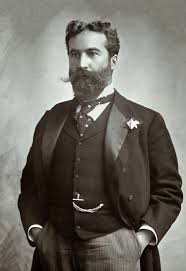
 Sir Donald MacAlister, 1st Baronet (May 17, 1854 – January 15, 1934), was a polymath, brilliant mathematician, distinguished physician, and academic administrator.
Queer Places:
University of Cambridge, 4 Mill Ln, Cambridge CB2 1RZ
Ascension Parish Burial Ground, Cambridge, City of Cambridge, Cambridgeshire, England
Sir Donald MacAlister, 1st Baronet (May 17, 1854 – January 15, 1934), was a polymath, brilliant mathematician, distinguished physician, and academic administrator.
Born on May 17, 1854, in Perth, Scotland, MacAlister rose from humble beginnings. A native Gaelic speaker, he excelled academically and attended the Liverpool Institute for Boys before entering St John’s College, Cambridge. In 1877, he achieved the highest score in the final mathematics examinations, earning him the title of Senior Wrangler, followed by an election as a Fellow of St John's.
Alongside his mathematical prowess, MacAlister was an extraordinary linguist reportedly fluent in roughly nineteen languages, including Greek, Arabic, Russian, Spanish, and Czech.
After briefly teaching mathematics at Harrow School, MacAlister pursued medicine at Cambridge, St. Bartholomew’s Hospital in London, and Leipzig. He became a physician at Addenbrooke’s Hospital and a prominent lecturer.
MacAlister left a profound mark on British higher education and medicine. He served as the President of the General Medical Council (GMC) for 27 years (1904–1931). He was also the Principal, Vice-Chancellor, and later Chancellor of the University of Glasgow, as well as a key founder of the Universities Bureau of the British Empire.
He was appointed Knight Commander of the Order of the Bath (KCB) in 1908 and created a baronet in 1924. He passed away on January 15, 1934, and is buried in Cambridge.
In 1876, during his time at St John's College, MacAlister was elected to the Cambridge Apostles, an elite, intellectual secret society founded in 1820.
The Apostles served as an influential intellectual hub for many of Britain's leading thinkers, writers, and scientists. Membership connected MacAlister to a tight-knit network of high-achieving peers across generations, fostering an environment of open, uninhibited philosophical and social inquiry.
While Donald MacAlister himself married Edith Florence Boyle in later life (they had no children, and his baronetcy became extinct upon his death), his connection to queer history primarily stems through the distinct cultural and social matrix of the Cambridge Apostles:
Historically, the Apostles provided a rare space within Victorian and Edwardian Britain for frank discussions surrounding homoeroticism, deep homosocial bonding, and Platonic love as a deliberate counter-discourse to rigid societal norms.
The society played a foundational role in shaping modern British queer culture, serving as a direct precursor to the intellectual circles of the Bloomsbury Group (which included Apostles like E.M. Forster, Lytton Strachey, and John Maynard Keynes).
Though many members navigated the strict anti-homosexuality laws of 19th- and early 20th-century Britain by marrying or keeping private lives shielded, participation in the Apostles placed MacAlister firmly within an inner circle characterized by progressive, avant-garde attitudes toward sex, affection, and personal relationships.
References:
Support this project
This website is a passion project researched, developed, and funded entirely by me. If you find the content valuable and would like to help support the ongoing research and hosting costs, any contribution is deeply appreciated.
Thank you for keeping this independent resource alive!
My books on Amazon: Elisa Rolle's books